Four years of selling typefaces through a marketplace.
I couldn’t have emailed a single customer.
- Role
- Type design
- Licence and pricing model
- Interface design
- Front-end
- Solo
- Context
- Independent — my own foundry
- Catalogue
- Six families
- Up to 66 styles
- Published in
- English
- German
The situation
Nordtype is the type foundry I run from Austria. Every typeface in it is mine — six families, the largest running to sixty-six styles, drawn and redrawn over several years.
The catalogue holds two kinds of thing on purpose. Contemporary workhorse families with the weight range and language coverage to carry a brand system, and single-style display faces as the entry point — distinctive, immediate, cheap enough to buy without a meeting. The display cuts travel through social and paid channels in a way a text family never will, and they’re usually the first thing someone buys from a foundry they’ve never heard of.
For four years it sold through MyFonts. Monotype handled discovery and payment and kept half of every sale, which left no customer relationship and no control over how the work was licensed or presented. So I built the shop: kept a commerce engine for tax, payment and licence maths, and designed everything in front of it.
Students get 75% off with full commercial rights, stepping down to 50% for two years after graduation. As a student I couldn’t afford typefaces, and the foundries that made it easiest for me are the ones I license today and specify for clients — you learn a family well enough to reach for it under deadline, and you don’t build that with a trial file.
The licence
The part I’d actually defend as design work.
Retail font licensing meters usage — desktop in workstations, web in tiers of monthly pageviews, apps in monthly active users. Every axis is a number the buyer has to produce about themselves and keep producing. Monthly pageviews is a figure you only have if you already run analytics on your own visitors, and it’s the one most likely to move without anyone noticing.
Exceeding a tier means going back to buy an upgrade. Most people stop thinking about it, which means the model manufactures quiet non-compliance and then calls the customer a pirate.
Nordtype prices on one number: the size of the licensee’s organisation. Desktop unlimited within it, web per domain with no traffic ceiling, apps per application. Nothing else counted, nothing re-counted later. That made room for the rest:
- 01Freelancers and agencies working on a client’s behalf covered at no extra cost — one piece of work shouldn’t need three licences
- 02Logo and trademark use included, including registering the mark
- 03Growth never invalidates a licence — the size at purchase holds permanently
- 04Terms ratchet one way: anything that gives more applies retroactively, anything restrictive only to future purchases
- 05Subsetting permitted outright
- WorkstationsRecount on every hire
- Monthly pageviewsEvery month, forever
- Monthly active usersEvery month, forever
- Freelancer add-onPer engagement
The storefront
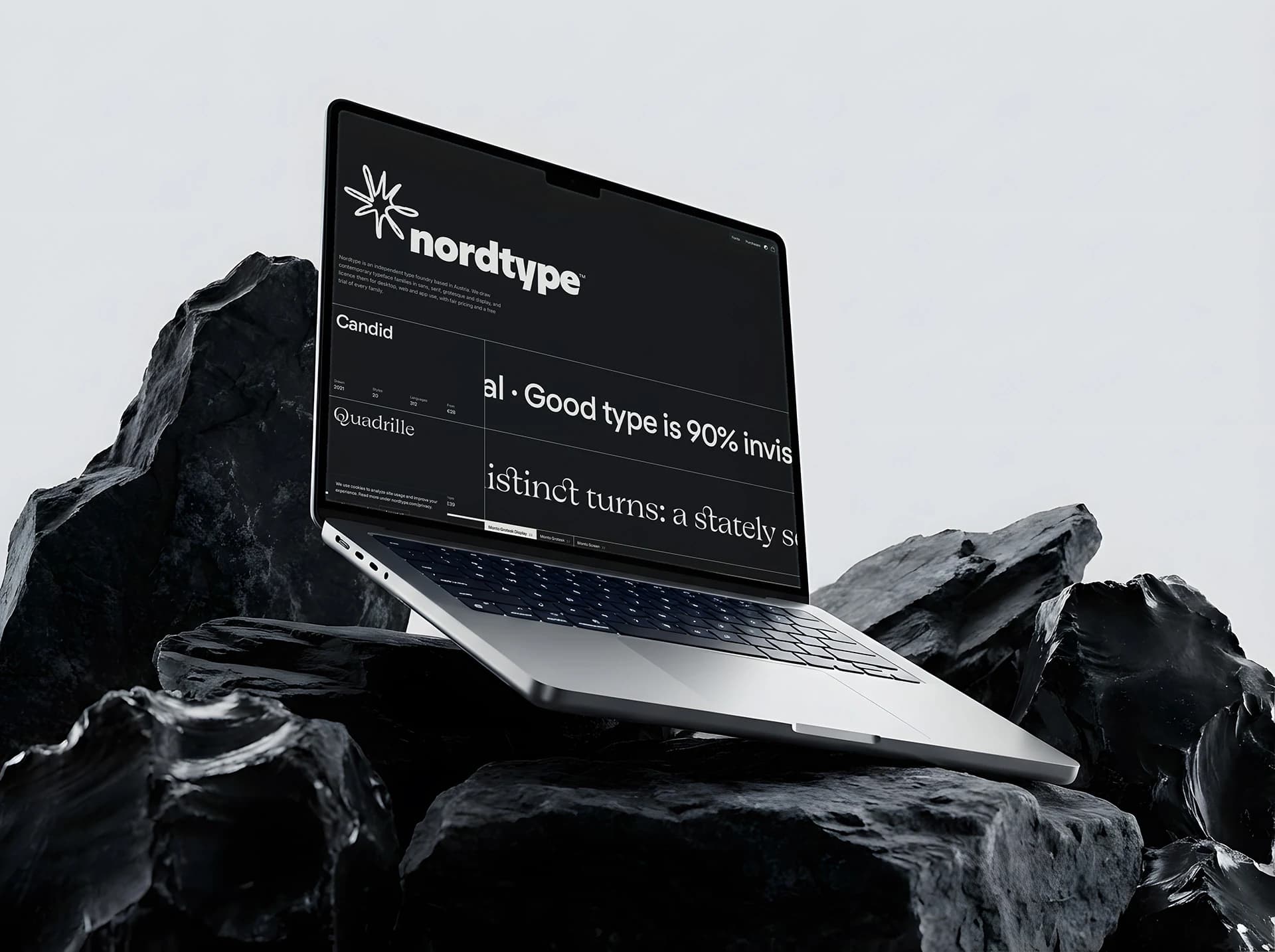
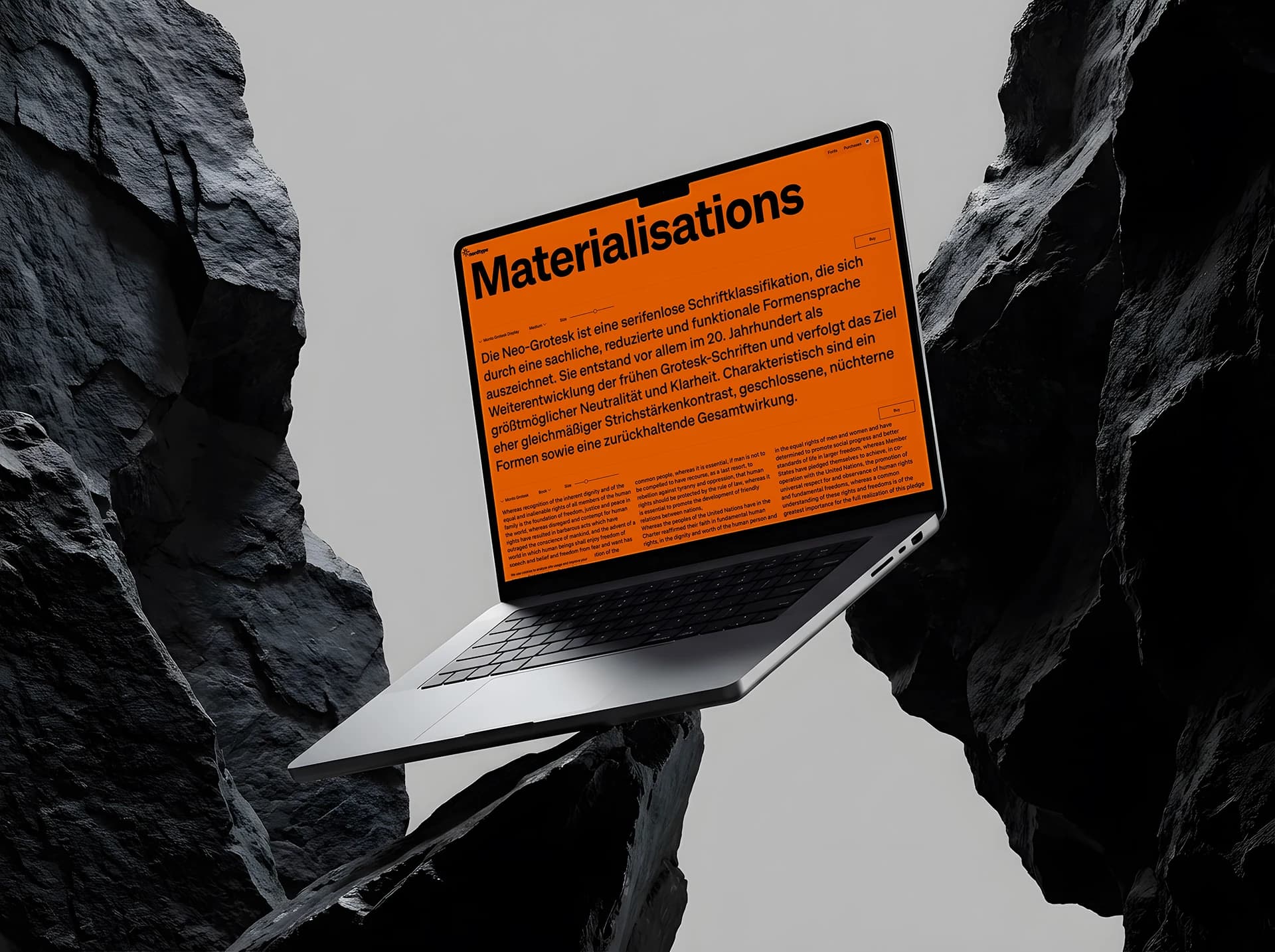
Most foundry catalogues are menus — a name and a price tell you nothing about a typeface, so you commit to a click before you learn anything. Every row here is a working specimen instead, set in its own face, with live text beside it and metadata in a fixed grid so the same facts compare down the column.
Each family carries its own colour pair that floods the row on hover and carries through into the family page. The catalogue is the homepage; everything non-transactional sits in the footer.
Where it stands
The shop is live at nordtype.com and the licence is published in English and German. The marketplace channel stays running as passive discovery, so the transition carries no gap. Whether paid acquisition can profitably feed the direct channel is still open — no conversion figures yet, because there aren’t any yet.